
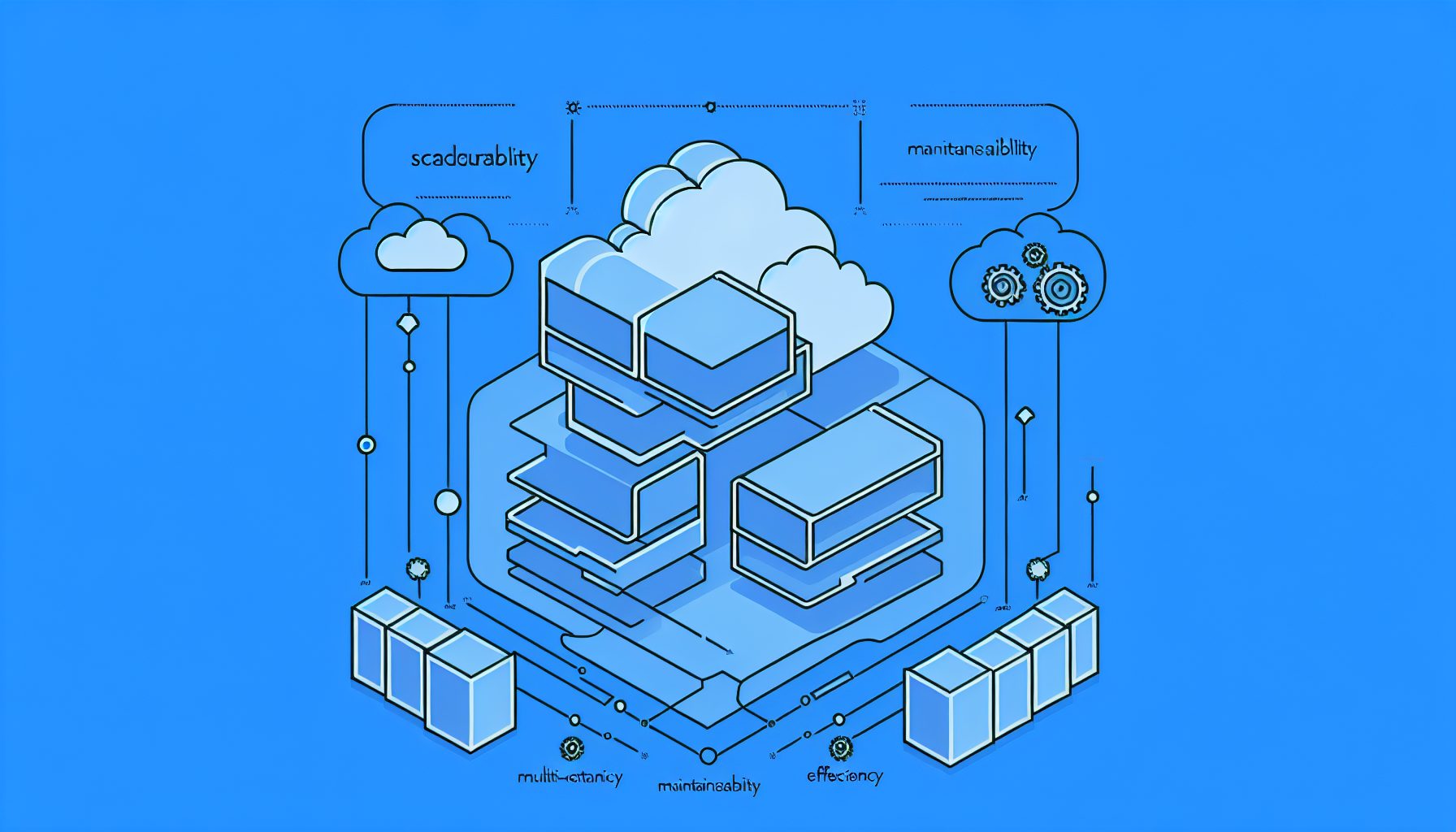
Designing a Modular SaaS Backend with Node.js: Clean Architecture, Scalable API Design, and Multi-Tenancy for React Frontends
The growth of Software as a Service (SaaS) solutions has transformed the landscape of software development. Among the many frameworks available for building robust backends, Node.js stands out due to its efficiency and scalability. In this article, we will explore how to design a modular SaaS backend that is easy to maintain, scalable, and capable of serving multiple clients. We will delve into clean architecture and API design principles tailored specifically for multi-tenancy, with a focus on delivering a seamless experience to React frontends.
Estimated Reading Time: 7 minutes
- Understanding modularity, multi-tenancy, and clean architecture
- Best practices for scalable API design
- Importance of a service layer for effective application architecture
- Concrete examples of a multi-tenant project management tool
- Common FAQs around multi-tenancy and service layers
- Key takeaways for architects and developers
Context and Challenges
When designing a SaaS backend, we often face a myriad of challenges including maintainability, scalability, and user isolation. A modular approach is not only conducive for developers but also enhances the end-user experience, which is vital for the success of any product.
A standard monolithic architecture can lead to a tightly coupled system where changes in one area may inadvertently affect others, making maintenance cumbersome and risky. This underscores the importance of adopting a modular design.
- Modularity: Breaking down the code into smaller, manageable pieces for easier testing and maintenance enhances productivity.
- Multi-tenancy: A software architecture where a single instance of software serves multiple tenants or clients securely and efficiently, optimizing costs and resource allocation.
- Clean Architecture: An architecture that separates concerns, making it explicit where business logic resides and how it interacts with databases and clients.
Understanding these concepts is paramount as they reveal pain points in existing frameworks and position developers to make informed decisions in building applications.
Solution / Approach
To tackle the aforementioned challenges, we can adopt a clean architecture approach combined with modular design principles and a focus on scalable API design. Node.js, with its event-driven architecture, provides the tools necessary to handle multiple requests concurrently without blocking the main thread, thus making it a fitting choice for our backend.
- Modular Structure: Each module should encapsulate its functionality, including services, controllers, and routes, ensuring that changes in one module do not directly impact others.
- Service Layer: Utilize a dedicated service layer to handle business logic, abstracting it away from HTTP routes. This keeps the API thin and allows for a more focused handling of incoming requests.
- API Design: Create RESTful APIs that are intuitive and follow standard HTTP methods (GET, POST, PUT, DELETE). You should also include versioning in your API endpoints to manage changes effectively.
- Multi-Tenancy Architecture: Implement a hybrid model where both shared and isolated database options can be utilized, allowing you to choose the right level of tenant isolation based on user needs.
For those looking to build a web application with an efficient backend, incorporating these architectural principles can lead to a scalable and maintainable service. Consider building your web application with MySushiCode for expert help in custom web development and SaaS engineering.
Concrete Example / Case Study
Imagine you are tasked with building a multi-tenant project management tool. Here’s how you might structure your application:
- Modules: Separate your project into modules such as user management, project management, and billing.
- Service Layer: Each module has its own service layer. For instance, the user management module will have a UserService to handle registration, authentication, and profile updates.
- API Design: Structure your API endpoints logically as follows:
- GET /api/v1/users
- POST /api/v1/users/register
- GET /api/v1/projects
- POST /api/v1/projects
- Multi-Tenancy: For user data, each tenant could have their data stored in a shared database with a tenant identifier, or larger clients might utilize their dedicated databases for tighter data isolation.
This modular structure not only enhances maintainability but also provides the flexibility to evolve each section as needed. For example, adding a new feature to the project management module can be done rapidly without extensive refactoring of user management.
FAQ
1. What is multi-tenancy and why is it important?
Multi-tenancy refers to an architecture where a single instance of software can serve multiple clients, or tenants. This setup is crucial for SaaS applications as it optimizes resource usage, reduces infrastructure costs, and facilitates easier updates and maintenance.
2. How can I ensure data isolation between tenants?
Data isolation can be achieved by using separate databases for individual tenants or by implementing a shared database with a tenant identifier for each record. The choice largely depends on your application’s requirements and data sensitivity.
3. Why should I use a service layer in my application?
A service layer abstracts business logic from the presentation layer (API). This separation enables easier testing, debugging, and modifications to application logic without affecting HTTP routes directly.
Authority References
Conclusion
Designing a modular SaaS backend with Node.js requires careful consideration of architecture and design principles such as clean architecture and multi-tenancy. By employing a modular structure, focusing on scalable API design, and utilizing a service layer, you can create a maintainable and robust solution for your React frontend. As technology trends evolve, investing in a strong architecture today could save significant time and resources in the future, ensuring your application can grow alongside your users.

Tech blogger specializing in SaaS and web applications, simplifying complex tools to help people understand, choose, and use modern digital technology.

Leave a Reply