
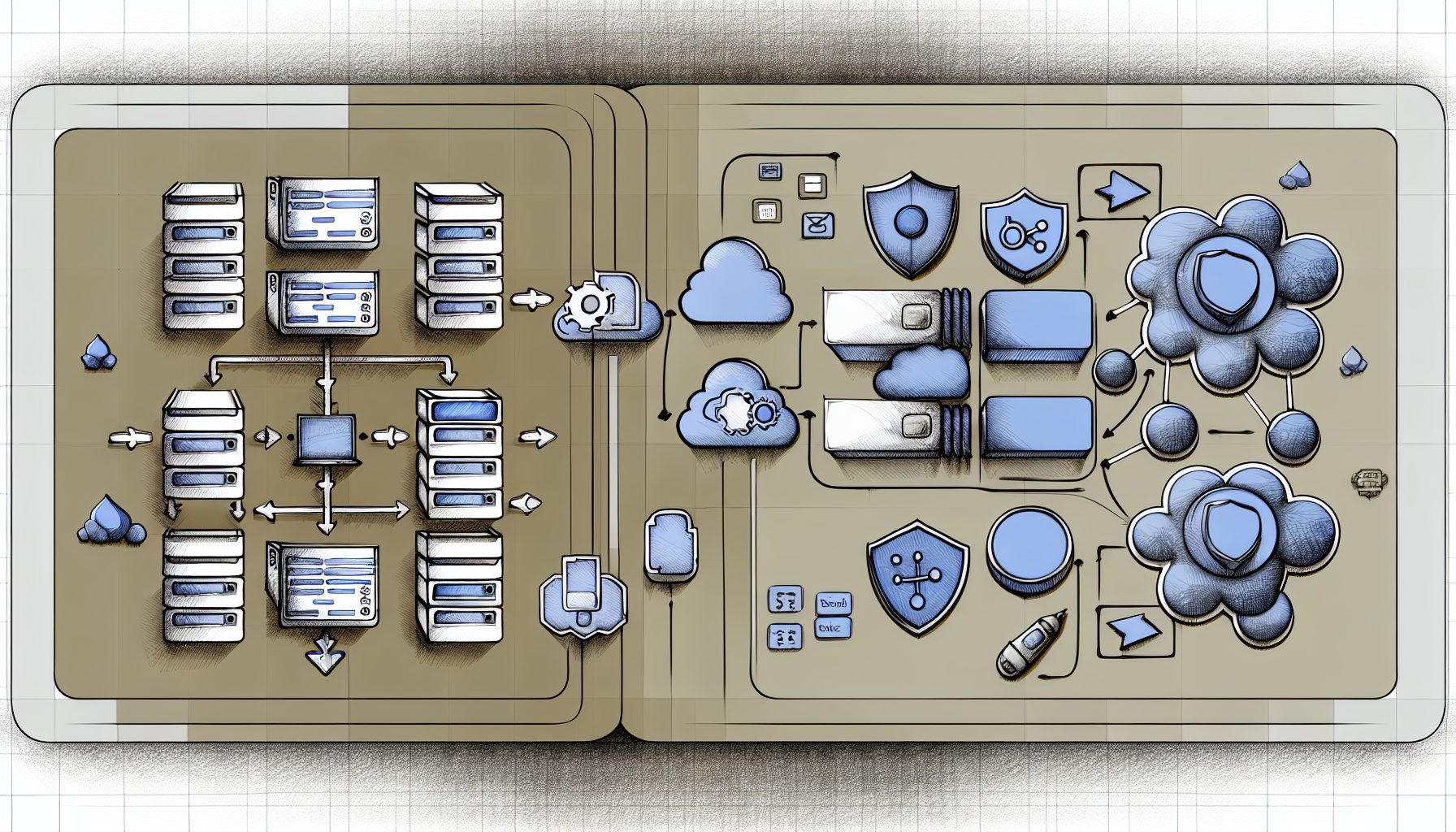
From API to UI: Building a Scalable Full-Stack SaaS App with Node.js and React
In the modern digital landscape, developing a scalable Software as a Service (SaaS) application has become essential for businesses striving to enhance their reach and fulfill increasing user demands. If you are contemplating the creation of a SaaS app, the selection of your technology stack is pivotal to its success. In this comprehensive guide, we will explore the process of building a resilient full-stack SaaS application using Node.js for the backend and React for the frontend, tackling potential challenges and offering clear solutions.
Estimated Reading Time: 7 minutes
- Understanding the architecture of full-stack SaaS applications.
- Identifying key challenges in SaaS development.
- Leveraging Node.js and React for scalable solutions.
- Examples of practical implementations in SaaS.
- Implementing security best practices.
Table of Contents
- Context and Challenges
- Solution / Approach
- Concrete Example / Case Study
- FAQ
- Authority References
- Conclusion
Context and Challenges
A full-stack SaaS application includes a backend (the API), which is responsible for data management and business logic, along with a frontend (the UI) where user interactions occur. The primary challenge is to ensure that both components operate in unison while being scalable and manageable.
During the development of a full-stack SaaS application, various common pain points emerge, including:
- Scalability: As your user base expands, your application must accommodate increased demand without compromising performance.
- Integration: The frontend and backend must communicate efficiently to provide a seamless user experience.
- Security: Protecting user data and interactions is crucial.
- Development Resources: Managing the development lifecycle can become strenuous, often requiring a skilled workforce.
Recognizing these challenges underscores the significance of selecting suitable technologies and designing a robust architecture from the beginning.
Solution / Approach
The synergy between Node.js for the backend and React for the frontend creates a formidable tech stack for developing scalable applications. Node.js, with its non-blocking, event-driven architecture, excels at managing multiple requests concurrently, making it a popular choice for building APIs. Conversely, React facilitates a dynamic, responsive user interface that can update seamlessly as data changes.
Your overall architecture could include:
- Node.js for constructing RESTful APIs.
- Express.js as a web application framework to simplify API development.
- MongoDB or similar NoSQL databases for agile data management.
- React for the frontend, capitalizing on its component-based structure for a streamlined UI.
- Docker for containerization, ensuring your application functions across various environments.
For development outsourcing, consider platforms like MySushiCode, which specialize in custom web development and SaaS solutions, enabling your internal team to concentrate on strategic initiatives while experts manage the coding process.
Concrete Example / Case Study
Let’s examine a practical scenario: building a SaaS application tailored for project management, featuring capabilities such as task assignment, progress tracking, and team collaboration.
- Backend Development with Node.js: Initiate the setup of an Express.js server. Establish endpoints for tasks, projects, and users to manage CRUD (Create, Read, Update, Delete) operations. For instance, you could implement an endpoint like
POST /api/tasksfor adding new tasks. - Database Integration: Utilize MongoDB to store tasks and user information. Each task may have a predetermined schema detailing its properties, such as title, description, and status.
- Frontend Development with React: For the UI, construct components such as
TaskList,TaskItem, andAddTask. Use Axios to facilitate API communication with your Node.js backend, retrieving task data and dynamically rendering it. - Deployment and Scalability: When deploying, employ Docker for app containerization, ensuring uniformity across development, testing, and production environments. Cloud services like AWS or Azure can be explored for simplified scaling as your user base grows.
As you refine your application, continually collect user feedback to improve your features and ensure fulfillment of their needs.
FAQ
1. What is the benefit of using Node.js for my backend?
Node.js allows for asynchronous processing, enabling it to manage multiple requests at once, making it an excellent choice for scalable applications.
2. Why choose React for the frontend of my SaaS application?
React’s component-based architecture facilitates quicker development and simpler management, aiding in the scalability of the frontend as your application expands.
3. How can I ensure my SaaS app is secure?
Adopt security best practices such as input validation, using HTTPS, and incorporating authentication and authorization mechanisms like OAuth or JWT to protect user data.
Authority References
- Node.js Documentation
- React Documentation
- MongoDB Documentation
- Web Application Firewalls (WAF) | Cloudflare
Conclusion
Developing a full-stack SaaS application using Node.js and React presents a robust solution to common challenges associated with scalability, integration, and development efficiency. By meticulously designing your architecture and harnessing the capabilities of these technologies, you can build an application that meets current needs while being adaptable for future growth. If necessary, consider outsourcing development tasks to professionals, such as those at MySushiCode, allowing you to focus on delivering exceptional value to your customers.

Tech blogger specializing in SaaS and web applications, simplifying complex tools to help people understand, choose, and use modern digital technology.

Leave a Reply